
• Skip to primary navigation
  • Skip to main content
  • Skip to primary sidebar
  • Skip to footer

Raleigh Estate Planning and Corporate Law Attorneys

  • ABOUT US
  • Attorneys
    • Lesley W. Bennett
    • Frances M. Clement
    • Reginald B. Gillespie, Jr.
    • Campbell K. Kargo
    • Michael A. Ostrander
    • Daniel C. Pope, Jr.
    • Kristine L. Prati
    • James E. R. Ratledge
    • Toler W. Ratledge
    • Paul F. Toland
    • Thomas J. Wilson
  • Practice Areas
    • Business Law
      • Business Startup
      • Business Operation
      • Mergers And Acquisitions
      • Exit Strategy / Succession Planning
      • Professional Practice Representation
    • Civil Litigation
    • Estate Planning and Trusts
      • Estate Planning and Asset Preservation
      • Estate and Trust Administration
      • Estate and Trust Disputes and Litigation
      • Special Needs Trusts
      • Medicaid Planning
      • Elder Law
    • Commercial Bankruptcy Litigation
    • Government Defense
    • Real Estate, Development & Land Use
    • Workers’ Compensation Defense
  • Blog
  • Resources
  • CONTACT US
  • 919-787-7711
You are here: Home / Blog

Approved for Medicaid: What Are You Responsible For?

April 11, 2018 By wrlaw

medicaid-approval

 Having a loved one receive a Medicaid approval notice normally provides the family the chance to breathe easily.  However, some responsibilities don’t stop once someone is approved.

A Medicaid Approval/Denial Notice looks like this in North Carolina.  The first section, marked “Approvals”, outlines who has been approved, the program for which they have been approved, the months that are being covered and, most importantly, how much the person covered is responsible for paying to the nursing home each month.  That’s right, even with Medicaid a person may still have to pay something for his or her care.

This amount is called the “Patient Monthly Liability” or “PML”, and it applies to both the long-term care and special assistance programs.  It is based on an individual’s income, but there are certain allowances: personal needs ($20 or $66 per month, depending on the program), supplemental health insurance and, in situations where there is a spouse at home there may be an allowance made for that spouse to keep some of the other spouse’s income.  The PML has to be paid every month, or the person may be discharged from the facility, regardless of Medicaid status.

It is important for spouses to remember that none of their income needs to be paid as part of the PML.  If the PML assigned to the Medicaid recipient exceeds the income of that individual, contact the caseworker for clarification.

The bank account of the Medicaid recipient has to have a balance of less than $2,000.00 on the last day of every month.  Many times clients are concerned because the Medicaid recipient’s monthly income will push the account balance over $2,000.00. That income is supposed to go to either the nursing home or the at-home spouse, meaning that it should be leaving the account at some point during the month it came in, so just because the account balance may exceed $2,000.00 at some point during the month is not a problem – it is the end of the month that counts.  If the Medicaid recipient’s account happens to build up to the point that it exceeds $2,000.00 even after payment of the PML or transfer to the at-home spouse, some of that money should be spent of the personal needs of the recipient to bring the balance back below $2,000.00  Failure to keep the person’s “reserve reduced” could result in termination of benefits.

Finally, Medicaid conducts annual reviews of each of its recipients.  These reviews are conducted via mail, and involve reaffirming the person’s eligibility, providing any updates needed, and providing copies of bank statements. These reviews must be completed and returned, or coverage may be terminated.

As outlined above, Medicaid approval does not mean an end to paperwork or responsibility.  If you have questions about approval or ongoing eligibility, please don’t hesitate to contact us.

Common Medicaid planning mistakes

March 15, 2018 By wrlaw

North Carolina Medicaid planning attorney

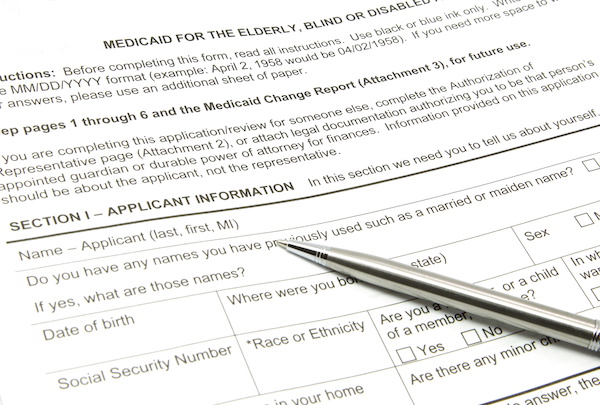
There are Medicaid rules that have been implemented specifically to shield and protect the assets of the elderly and those with special needs. People who plan well enough in advance will have more options to aid in protecting their assets. A Medicaid planning attorney will help take the proactive route in planning for long term care and Medicaid expenses of a loved one.

What are some of the most common Medicaid planning mistakes made?

  1. Not Using An Attorney. One of the most common mistakes made in Medicaid planning is attempting to create a plan independent of an attorney. Failure to make a plan with an attorney elevates your risk for errors when planning the care needs and making asset protection arrangements. For example, eligibility needs of the Medicaid recipient can be denied if assets or wealth have been transferred within a certain look-back period.
  2. Waiting Too Long To Plan. Waiting too long to make a Medicaid plan is another common misstep. The earlier the person plans ahead, the more options the person has available to them. Most people think of the issue when the person becomes ill, but the ideal time to plan is before a major event occurs.
  3. Not Using Asset Protection. Not knowing the protections available is another common error made in Medicaid planning. There are all types of asset protection options available such as immediate annuities and spousal allowances that aren’t taken advantage of due to lack of knowledge.
  4. Taking Advice From Non-Legal Experts. While it is good to gather perspective from others, it is often not a good idea to rely on the advice of others where legal matters and assets are concerned. Be wary of advice solicited from others, and always seek the final opinion of a practicing attorney to avoid any costly planning errors.

What is the difference between a Medicaid attorney and estate planning attorney?

Medicaid planning attorneys have expertise in identifying what steps should be taken if the patient becomes incapacitated. The estate planning attorney focuses on the allocation and management of assets when the person dies.

What does a Medicaid attorney actually do?

A Medicaid planning attorney can help you maintain your finances while addressing the expenses associated with caring for a loved one who is incapacitated. The attorney can be instrumental in helping the individual save money. Applying the appropriate strategies will ensure that a loved one is getting the best possible care while existing resources are carefully managed to accommodate future care needs.

Why would you want to use a Medicaid planning attorney?

Care for an ailing loved one is expensive. Care provided for the elderly can be devastating to a household’s finances. In order to make sure that the highest quality of care is available to the individual, careful planning is necessary. A Medicaid planning attorney assists with those matters. They take into account the family’s needs and household finances when completing your Medicaid plan for your loved one.

With all of the applicable laws and protections in place to protect families, Medicaid attorneys can prove to be an invaluable resource. Their in-depth knowledge of the law and their ability to implement the appropriate strategies for supporting the care needs of the patients protects loved ones from financial distress. A disinterested third party can help you make the right calls and avoid any conflict of interest. Medicaid planning saves you money, protects your assets, and elevates the quality of care for your loved one.

What You Need To Know About Wills And Trusts In North Carolina

February 5, 2018 By wrlaw

Many people don’t realize that almost everyone has an estate, regardless of their wealth. Your estate is considered to be everything that you own such as vehicles, furniture, bank accounts and even your clothing and personal items.

Although it’s unpleasant to imagine something happening to us, it is a fact of life that accidents happen and we grow older. What will happen to all of your property and personal possessions in the event something happens to you? Planning the final disposition of your estate is wise whether you are young or old and especially if there are children involved. Estate planning is not difficult and an estate planning lawyer can advise you in all manner of wills and trusts and can make drawing up a will or trust simple and easy.

Estate planning begins when you draw out a will or a living trust. If you do not have one when you die, the laws of your state will govern the distribution of your estate, even if you always wanted your 100-year-old porcelain doll, given to you by your grandmother, to go to your daughter. That classic car you have put a lot of love and care into was always intended to be your son’s car one day, but will it?

In North Carolina, any person 18-years of age and older can make a will or living trust, and that will or trust will be recognized by law.

Whatever debts you owe upon your death, whether it is a car loan or fees owed for personal services, this will come from the assets of your estate. Once your debt has been satisfied, if you do not have a will or trust explicitly stating your final wishes, the courts will determine who in your family gets what. Most states split assets between a surviving spouse and any children.

You may have wanted to split your assets between your two children and a trusted lifelong friend, but without your wishes being known, the court usually distributes assets according to the laws of your state. If you have jointly-owned assets, these may not be controlled by your will. For instance, if you have a 401(k) or life insurance policy where a beneficiary has been named, it may transfer directly to your beneficiary without being heard in probate.

Many families and professionals of all types prefer Revocable Living Trusts as this type of trust prevents the court from controlling your assets in the event you are incapacitated by having an appointed trustee act on your behalf according to your wishes. These trusts can be changed at any time, and the person you appoint as trustee can also change.

With a will, your assets are distributed how you have stated you wish them to be and once the wishes of the will have been performed, that is the end of it. With a living trust. if you have substantial wealth or inheritance, your children can inherit your wealth at whichever age you wish them to inherit, in the meantime, your assets are protected by the trusted person you have appointed. Perhaps you have a loved one who is horrible at managing money and you don’t feel comfortable giving them a lump sum of your estate but you want to provide for them. You can appoint any person or entity as your trustee, and that person can distribute payments to them over a period of time or for the remainder of their lives.

There are many different wills and trusts and aspects to them that are designated by you so that you can provide for your family and loved ones or even show your love and thoughtfulness. A few of the things that estate planning can involve besides providing wealth include:

  • Instructions for your care in the event you become unable to manage your affairs
  • Name guardians and trustees for minor children
  • Provide for the transfer of your business
  • Minimize the burden of taxes, court fees or other legal fees on your loved ones
  • Provide for pets
  • Provide for disabled minors so that there is no disruption in their government benefits
  • Name the locations of important papers, passwords and other information of this nature

It is always wise to consult with an estate planning lawyer who has the expertise to advise you in the matter of wills and living trusts. One of our experienced estate planning attorneys can help you navigate the laws of North Carolina and are able to advise you of all the pros and cons of each type of will or trust so that you can find the best option for you and your family.

What Business Owners Need To Know About The 2018 Tax Law Changes

January 8, 2018 By wrlaw

2018 will see the first significant tax reform since 1986. This reform affects everything in the economy as well as everyone in the country. The ways it will affect individuals, couples, corporations and small business owners will vary, but everyone will see changes in 2018.

The Tax Cuts and Jobs Act is a tax reform bill that will provide tax cuts for both corporations and small business owners and will restore some tax benefits to individuals. This tax reform will not affect 2017 taxes, and some provisions in the final tax bill will remain until 2025.

70 percent of Americans claim a standard deduction when filing taxes and they will see slight increases in income with the 2018 tax reform bill, which is still being fleshed out as of January. Many people are unaware how their taxes are calculated and what deductions mean for them. Businesses have a different set of tax codes and many businesses employ the expertise of an experienced tax attorney to ensure their business taxes are properly calculated and paid.

What The Tax Cuts and Jobs Act means for business owners is substantial. The new tax reform changes both tax brackets and income ranges. The IRS has published an announcement which lists many new provisions, some of which are unrelated to the new reform bill. Individuals, as well as business owners, will see these changes in the 2018 tax year.

Some of the reform’s changes which will affect business owners in 2018 include:

  • Lowers the tax burden on pass-through businesses (owners of a business who pay taxes on income derived from that business on their personal income tax returns)
    Small business owners can start deducting 20 percent of their qualified business income in 2018 whether that is a sole proprietorship, partnership or S corporation which already sees lower taxes. There are some limits such as a limit of $157,500 individually claimed and a $315,000 limit of jointly claimed income.
  • The tax reform includes a rule to prevent abuse of the pass-through tax break
    If a partner in a pass-through also earns a salary from the jointly-owned business, their income would be subject to regular income tax rates. To prevent people from claiming their salary income as a business profit in order to take advantage of the pass-through deduction, the bill places limits on how much income qualifies for the deduction.
  • Territorial tax system
    U.S. corporations are required to pay U.S. taxes on profits they have earned abroad, The new system will end the double taxation and they will pay one tax.
  • Repatriation of foreign assets
    Many corporations and businesses hold assets abroad. U.S. Corporations have approximately $2.5 trillion in foreign profits. The new tax reform bill provides an incentive to bring these assets back to the U.S., assessing a one-time repatriation rate of 15.5 percent on cash and equivalent assets and 8 percent on liquid assets over a period of 8 years.
  • Dividend Reduction and Net Losses
    The reform bill reduces 80 percent deductions on dividends received to 65 percent deductions, and 70 percent deductions on dividends received to 50 percent deductions. The reform also limits the deduction for net operating loss carryovers up to 80 percent of the business’s taxable income.

If you are a small business owner, you may want to consult one of our experienced tax attorneys regarding these new changes for what they may mean for you both individually and as a business owner. We can help interpret the tax law as it applies to your situation, and help you navigate your way through the changes.

Do You Need An Estate Plan?

December 5, 2017 By wrlaw

Do you need an Estate Plan? The short answer is “Yes, if you are age 18 or older, you need an estate plan.” It doesn’t matter if you are old or young, if you have built up considerable wealth or if you are just entering adulthood —you need a written plan to keep you in control and to protect yourself and those you love.

  • It is important that every adult, regardless of age or wealth, have both a lifetime plan and an after-death estate plan.
  • Planning for incapacity will keep you in control and let your trusted loved ones care for you without court interference – and without the loss of control and expense of a guardianship or conservatorship proceeding.
  • Every adult needs up-to-date health care directives.
  • It is important to leave written instructions to make sure you are the one who selects who’s in charge of when and how your assets will be distributed.

What is an Estate Plan?

Your estate is comprised of the assets you own, including your car, home, bank accounts, investments, furniture and personal belongings. No matter how large or how small your estate, you can’t take it with you when you die, and you probably want certain people to have certain things you own.

To make sure that happens, you need to provide written instructions stating who you want to receive your assets and belongings, what you want them to receive, and when they are to receive it—that is the essence of an estate plan. If you have young children, you will need to name someone to raise them in your place and to manage their inheritance.

Without an estate plan, state law will govern who your assets will go to and how your estate is handled, and this can often lead to a surprising and undesirable result for your loved ones.
A properly prepared estate plan also will have instructions for your care (and the management of your assets) if you become incapacitated, even for a short time, due to illness or injury. Without the proper documents in place, your family will have to ask the court for permission to use your assets to take care of you and to oversee your care. That process is out of your control and it takes time and costs money, making an already difficult situation even more difficult for your family.

Having a plan in place is very important even for families of modest means because 1) they can least afford to pay unnecessary court costs and legal fees and 2) state laws, which take over in the absence of planning, often distribute assets in an undesirable way.

It is important to have the counseling and assistance of an experienced estate planning attorney who knows the laws in your state and has the expertise to guide you in making difficult decisions such as who will raise your children and who will look after your care at incapacity. Contact the attorneys at Wilson Ratledge to discuss any estate planning questions that you may have.

Estate Planning in North Carolina and How It Affects Your Family

November 28, 2017 By wrlaw

No one likes to think about leaving our loved ones. Unfortunately, dying is an inevitable part of life. Preparing for this day will not only give you peace of mind but will ensure that your assets are divided as you wish. If you have minor children, it also ensures that they are taken care of.

Estate plan basics

An estate plan is a plan to be used in the event of your death. It basically consists of everything you own. This includes bank accounts, homes, automobiles and your personal belongings. Any insurance policies are also included.

There are many details that are specific under an estate plan. Your wording can make the difference in how your estate is handled. An estate planning lawyer can help you create a plan to ease your mind.

What estate plans cover

An estate plan covers different topics that are important to you and your family. One such topic is to appoint a guardian for your children. This means the person you choose will be able to make decisions on your children’s behalf for things like financial or health decisions. Inheritance protection is also included to protect the children’s inheritance from individuals like creditors.

An estate plan also covers disability, legacy, tax and insurance planning. You will be able to dictate what will happen to you in the event you become permanently disabled. You also will be able to figure taxes and know what will come out of your estate to cover these when the time comes.

Another great feature of having an estate plan in place is deciding who will take care of your pets after you are gone. Your pets are family, and you want to ensure that someone you trust will take care of them.

North Carolina laws on estate plans

In the state of North Carolina, it is best to have an estate plan in place before you die. If not, intestate laws fall into place. This means your assets will automatically be passed to your heirs regardless of who you wish to receive them.

For instance, any minor children who are to receive assets or money will be controlled by the court system until they are 18 years old unless you have an appointed guardian for them. In other words, the courts determine how the money is spent and where your children will reside after you are gone.

If you have a spouse and no children, the spouse receives everything. If there is no spouse but there are children, the children receive everything. If there are both, the assets will be divided.

Let an estate planning lawyer help you

It is best to have an experienced estate planning lawyer sit down and work out the details of your estate. It’s never to early to get your plan in place because you never know what tomorrow holds. Give us a call, and we will create a plan specifically for you and your family.

  • « Go to Previous Page
  • Page 1
  • Interim pages omitted …
  • Page 30
  • Page 31
  • Page 32
  • Page 33
  • Page 34
  • Interim pages omitted …
  • Page 42
  • Go to Next Page »

Primary Sidebar

Search

Categories

  • AI
  • Bankruptcy
  • blog
  • Business Law
  • Commercial Bankruptcy
  • Corporate Transparency Act
  • Estates and Trusts
  • Exit Planning
  • Firm News
  • Medicaid Planning
  • Mergers and Acquisitions
  • Real Estate
  • Special Needs
  • Taxes
  • Uncategorized
  • Workers' Compensation

Footer

Contact Us

Raleigh, NC

4600 Marriott Dr., Suite 400
Raleigh, North Carolina 27612
Phone: 919-787-7711
Fax: 919-787-7710

Connect With Us

  • Facebook

Practice Areas

  • Commercial Bankruptcy Litigation
  • Business Law
    • Business Operation
    • Business Startup
    • Exit Strategy / Succession Planning
    • Mergers And Acquisitions
    • Professional Practice Representation
  • Civil Litigation
  • Government Defense
  • Real Estate, Development & Land Use
  • Estate Planning and Trusts
    • Asset Preservation Planning
    • Estate and Trust Administration
    • Estate and Trust Disputes and Litigation
    • Estate Planning and Asset Preservation
    • Special Needs Trusts
    • Medicaid Planning
    • Elder Law
  • Workers’ Compensation Defense
  • Tax Audits
  • Tax Collections
  • Tax Liens

Copyright © 2025 Wilson Ratledge PLLC. · Site by LegalScapes · Privacy Policy · Disclaimer

  • Commercial Bankruptcy Litigation
  • Business Law
  • Civil Litigation
  • Government Defense
  • Real Estate, Development & Land Use
  • Estate Planning and Trusts
  • Workers’ Compensation Defense